Automation and Workforce Evolution
In the 21st century, automation stands as one of the most transformative forces reshaping global industries. From manufacturing floors to corporate offices, the integration of machines, robotics, and artificial intelligence (AI) has revolutionized how work is performed, managed, and valued. While automation brings remarkable efficiency, speed, and precision, it also challenges traditional employment structures and compels humanity to rethink the future of work itself. The evolution of the workforce in this new era is not merely about technology—it is about adaptation, re-skilling, and redefining what it means to be human in an increasingly automated world.
1. Understanding Automation in the Modern Era
Automation refers to the use of technology to perform tasks with minimal human intervention. It encompasses everything from basic mechanical processes to complex decision-making systems powered by AI. In industries such as automotive manufacturing, automation has long been synonymous with assembly-line robots. However, the digital revolution has expanded automation far beyond the factory, reaching into finance, healthcare, logistics, education, and even creative professions.
Technologies such as robotic process automation (RPA), machine learning, and natural language processing (NLP) now allow software bots to perform repetitive administrative tasks, analyze vast datasets, and even engage in customer service. This shift has redefined productivity metrics and pushed organizations toward higher operational efficiency.
2. The Economic Imperative Behind Automation
At its core, automation responds to an enduring economic principle: the pursuit of efficiency. Businesses adopt automated systems to reduce costs, eliminate errors, and increase speed. For example, in logistics, automated warehouses powered by robotics can process orders around the clock with unparalleled precision. In financial services, algorithms execute trades in microseconds—far faster than any human could.
However, the adoption of automation is not solely about cost reduction. It enables scalability, consistency, and innovation. By delegating routine tasks to machines, human workers can focus on higher-order problem-solving, creativity, and strategic thinking. When implemented responsibly, automation enhances—not replaces—human potential.
3. Historical Context: From the Industrial Revolution to the AI Age
The fear of machines replacing human labor is not new. During the Industrial Revolution of the 18th and 19th centuries, mechanical innovations displaced manual workers but also gave rise to new industries, professions, and economic models. The same pattern emerged with the introduction of computers in the 20th century—initially viewed as job destroyers, they eventually became tools that expanded human capability.
Today, the AI revolution represents the next stage of this ongoing transformation. Unlike past waves of mechanization that replaced physical labor, modern automation increasingly targets cognitive tasks—data analysis, decision-making, and even elements of communication. This shift makes the current transition more complex and widespread than any before it.
4. The Changing Nature of Work
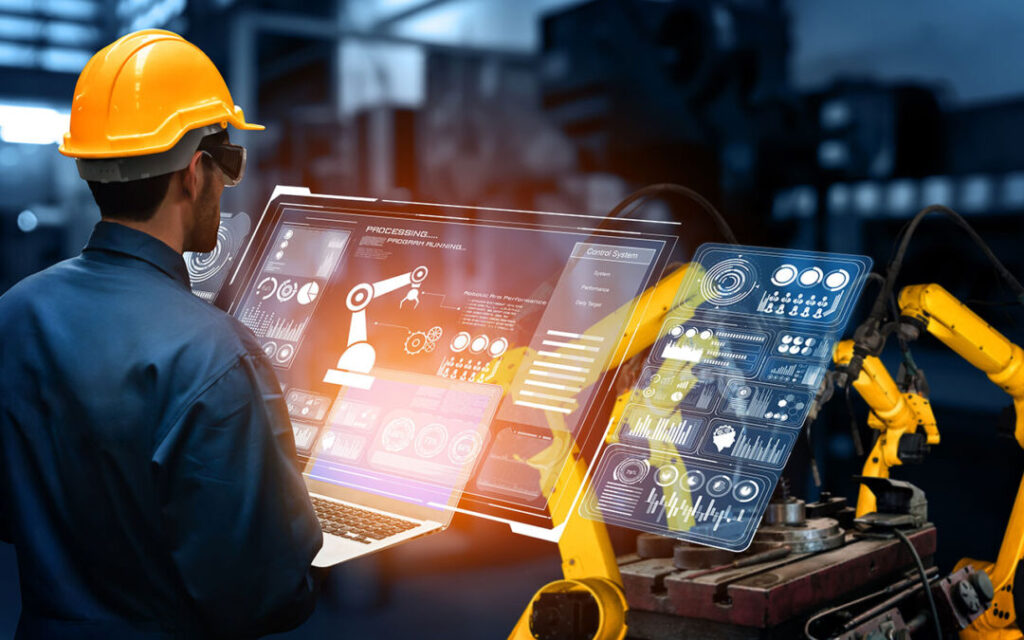
As automation advances, the structure of the workforce is evolving. Many traditional roles are being redesigned or eliminated, while entirely new ones are emerging. For instance:
- Manufacturing jobs are increasingly managed by robotics engineers and automation technicians.
- Administrative roles are being transformed by digital assistants and RPA systems.
- Data-driven positions, such as machine learning engineers and AI ethicists, have become critical in nearly every sector.
- Service industries now rely on chatbots, autonomous delivery systems, and predictive analytics.
This transformation emphasizes skill evolution over job elimination. The future of work is not about machines replacing humans—it’s about humans collaborating with machines.
5. The Skills of the Future
As automation reshapes industries, the demand for certain skills grows while others decline. Routine, repetitive tasks are increasingly automated, while skills involving critical thinking, creativity, emotional intelligence, and complex problem-solving are becoming more valuable.
Key competencies for the evolving workforce include:
- Digital literacy: Comfort with AI tools, data analysis, and automation systems.
- Adaptability: The ability to continuously learn and adjust to technological changes.
- Collaborative intelligence: Working effectively alongside intelligent systems.
- Ethical and strategic thinking: Understanding the implications of automation on society and business.
Educational institutions and training programs must adapt to this new reality, emphasizing lifelong learning and interdisciplinary knowledge rather than static career paths.
6. Challenges and Social Implications
While automation offers efficiency and innovation, it also brings significant challenges. Job displacement is a pressing concern, particularly for workers in sectors reliant on routine tasks. According to various labor studies, millions of jobs may be partially or fully automated by the 2030s, requiring massive workforce transitions.
This transformation raises social and ethical questions: How do societies ensure equitable access to new opportunities? How do we support workers displaced by automation? How do we prevent economic inequality from widening as technology accelerates?
Governments, educational systems, and corporations must collaborate to create reskilling programs, social safety nets, and policies that promote inclusive growth. Without such interventions, automation risks deepening existing disparities rather than alleviating them.
7. Automation as a Catalyst for Human Empowerment
Despite concerns, automation also has the potential to liberate humans from monotonous work. By delegating routine or hazardous tasks to machines, workers can focus on innovation, empathy, and purpose-driven work—areas where human capabilities shine. For example:
- In healthcare, automation assists doctors in diagnostics, allowing them to dedicate more time to patient care.
- In education, AI-powered systems personalize learning experiences, giving teachers better insights into student needs.
- In agriculture, smart machines optimize resource use, improving sustainability and food security.
When implemented ethically, automation becomes a partner in progress, augmenting rather than replacing human value.

8. The Role of Leadership and Organizational Culture
Successful integration of automation requires visionary leadership. Organizations must foster a culture that embraces innovation, continuous learning, and adaptability. Transparency about the goals of automation—especially regarding its impact on employment—is crucial for maintaining trust among employees.
Leaders should view automation not as a cost-cutting mechanism but as a strategic enabler of transformation. Investing in human capital, retraining, and employee well-being ensures that technology adoption enhances productivity without eroding morale or social cohesion.
9. Ethical and Regulatory Considerations
Automation raises important ethical and regulatory questions. As AI-driven systems make decisions about hiring, lending, or healthcare, issues of bias, accountability, and data privacy become critical.
Governments and international organizations are beginning to establish frameworks for responsible automation—ensuring transparency, fairness, and human oversight. Corporate governance must also prioritize ethical standards, ensuring that automation benefits society rather than concentrating power among a few.
10. The Future: Collaboration Between Humans and Machines
The future of work will likely be defined by human–machine collaboration. Rather than a competition, this relationship represents a synergy—machines handle precision, scale, and speed, while humans provide context, ethics, and creativity.
In this hybrid environment, success will depend on how effectively organizations and individuals harness both computational intelligence and human ingenuity. As technology evolves, the most resilient workers will be those who learn continuously, adapt quickly, and collaborate openly with intelligent systems.
11. Conclusion
Automation is not the end of work—it is the evolution of work. Just as past industrial revolutions reshaped society, today’s technological transformation is redefining productivity, employment, and human identity. The challenge before us is not to resist automation but to shape it responsibly, ensuring that its benefits are distributed broadly and equitably.
The future belongs to those who recognize that automation, when guided by ethical principles and human creativity, can empower people to achieve more than ever before. In this evolving landscape, our most valuable resource remains not the machine—but the human mind that imagines, innovates, and leads the way forward.