Data Privacy and User Trust
In the digital age, data has become the currency that powers innovation, commerce, and communication. Every interaction online—whether it’s a social media post, an online purchase, or a GPS location ping—creates a trail of data. This data provides immense opportunities for businesses to better understand their customers, improve products, and personalize services. However, it also presents profound challenges in terms of privacy, security, and ethics.
At the center of this dynamic lies a fundamental question: How can organizations balance the benefits of data-driven innovation with the responsibility to protect user privacy and maintain trust?
1. Understanding Data Privacy
Data privacy refers to the right of individuals to control how their personal information is collected, stored, and shared. Personal data includes any information that can identify a person—such as names, addresses, emails, IP addresses, biometric data, and even online behavior patterns.
In essence, data privacy is not merely a technical issue; it is an ethical and human rights concern. When people use a digital service, they implicitly enter a relationship of trust with the organization managing their data. If that trust is broken, the consequences go beyond individual harm—they can erode public confidence in entire industries.
2. Why User Trust Matters
Trust is the foundation of every successful digital relationship. When users trust that their information is safe, they are more willing to engage, share data, and use digital services extensively. Conversely, when trust is compromised—through data breaches, misuse, or lack of transparency—users may disengage, seek alternatives, or demand stricter regulations.
According to numerous surveys, consumers increasingly make purchasing and usage decisions based on how companies handle their data. In other words, data ethics has become a competitive differentiator. Trust fosters loyalty, and loyalty fuels long-term success.
3. The Evolving Landscape of Data Collection
Over the past decade, data collection has expanded dramatically. Companies now track user behavior across multiple devices and platforms, analyzing browsing history, app usage, location data, and even voice interactions. This level of monitoring, while offering personalized experiences, has also blurred the lines between convenience and surveillance.
The advent of artificial intelligence (AI) and machine learning has amplified these concerns. Algorithms trained on large datasets can infer sensitive details about individuals, such as political beliefs or health conditions, even when users have not explicitly provided such information. This raises ethical questions about consent, bias, and the limits of data usage.
4. Regulatory Frameworks and Compliance
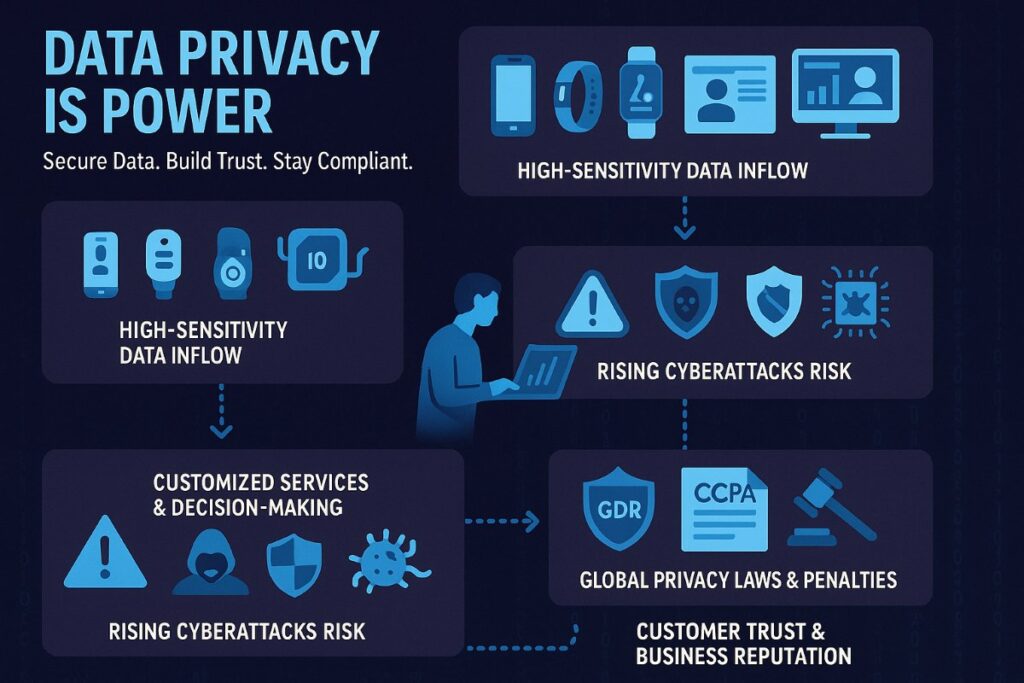
Governments worldwide have responded to growing privacy concerns with stringent data protection laws. Two of the most influential frameworks are the European Union’s General Data Protection Regulation (GDPR) and the California Consumer Privacy Act (CCPA).
The GDPR, implemented in 2018, set a global precedent by emphasizing user consent, the right to be forgotten, and strict penalties for non-compliance. Similarly, the CCPA grants California residents the right to know what personal information companies collect, request its deletion, and opt out of data sales.
These regulations underscore a global shift toward data ownership by individuals rather than corporations. They compel organizations to adopt ethical practices, strengthen security measures, and provide transparency in their data policies. While compliance can be challenging, it is also an opportunity to build credibility and demonstrate respect for users’ rights.
5. Building and Maintaining User Trust
Earning and maintaining user trust in a data-driven world requires more than legal compliance. It demands a proactive, ethical, and transparent approach to data management. Organizations can build trust by focusing on five key principles:
- Transparency: Clearly communicate what data is collected, how it’s used, and with whom it’s shared. Avoid complex legal jargon in privacy policies and make them easy for users to understand.
- Consent: Ensure that data collection is always based on informed and explicit consent. Give users meaningful choices and control over their personal information.
- Security: Protect user data through encryption, access controls, and regular audits. Data breaches not only cause financial loss but also irreparable damage to reputation.
- Accountability: Establish clear internal policies and hold employees accountable for data handling. Ethical data governance must be part of corporate culture.
- Privacy-by-Design: Integrate privacy protections into every stage of product development rather than treating them as an afterthought.
6. The Role of Technology in Safeguarding Privacy
While technology can be a source of risk, it also provides powerful tools to enhance privacy. Advanced encryption methods, differential privacy techniques, anonymization, and decentralized data storage can significantly reduce vulnerabilities.
Emerging paradigms like federated learning—where AI models are trained on user devices without sharing raw data—illustrate how innovation and privacy can coexist. Similarly, blockchain technology offers new ways to give users ownership and traceability over their personal data transactions.
However, technology alone cannot guarantee privacy. Ethical oversight, human judgment, and robust policy frameworks must guide how these tools are implemented.
7. The Ethical Dimension of Data Use
Ethics must remain at the heart of data governance. Even when data use is legally permissible, it may not always be morally acceptable. For example, using personal data to manipulate behavior, influence elections, or exploit vulnerable populations may comply with the letter of the law but violate its spirit.
Organizations must therefore cultivate an ethical mindset, ensuring that every data-related decision aligns with values such as fairness, respect, and transparency. Establishing ethics boards, conducting impact assessments, and engaging with privacy advocates can help align technology with societal good.
8. The Cost of Breaches and the Value of Trust

Data breaches have become alarmingly common, with major corporations losing millions of records to cyberattacks each year. Beyond financial losses and regulatory fines, the real cost is the erosion of trust.
Recovering from a privacy scandal is far more difficult than preventing one. Users may forgive a mistake, but they rarely forget a betrayal of trust.
Conversely, companies that champion privacy often gain long-term advantages. Apple, for example, has built its brand around protecting user data, using privacy as a core selling point. This demonstrates that ethical data practices are not just compliance issues—they are strategic assets.
9. Looking Ahead: The Future of Data Privacy
As technology evolves—through AI, the Internet of Things (IoT), and quantum computing—the boundaries of privacy will continue to be tested. Future challenges may include managing biometric data, regulating autonomous systems, and addressing the ethical use of synthetic data.
To navigate this future, a collaborative approach is essential. Governments, corporations, technologists, and users must work together to develop adaptable frameworks that protect privacy without stifling innovation.
10. Conclusion
In the digital economy, data privacy and user trust are inseparable pillars of sustainability. Privacy is not merely a compliance checkbox; it is a promise—a commitment to respect the dignity and autonomy of every user.
Organizations that embrace transparency, ethical governance, and user empowerment will not only comply with regulations but also earn the loyalty of their audiences. In a world where trust is fragile and data is abundant, the greatest currency any company can hold is not information itself—but the confidence of those who choose to share it.