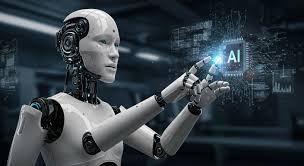
For years, the dominant narrative surrounding artificial intelligence and robotics has been one of impending doom: a future where machines render human workers obsolete, leaving millions unemployed and adrift. The headlines are hard to ignore—”Robots Are Stealing Your Job” has become a familiar refrain.
But as we stand in 2026, the reality unfolding is far more nuanced and, for many, surprisingly optimistic. The story is not simply one of replacement, but of transformation, augmentation, and the emergence of entirely new categories of work . While the anxiety is understandable, the data suggests a job market in flux—one where technology is simultaneously displacing routine tasks and creating unprecedented demand for skilled talent, both technical and human-centric.
This article cuts through the hype to explore how AI and robotics are genuinely changing the employment landscape in 2026. We’ll examine which jobs are under pressure, which new roles are surging, and—most importantly—how workers and businesses can navigate this transition to thrive in the new economy.
H2: The Big Picture: Disruption, Not Destruction
The most critical takeaway from the 2026 job market is that while disruption is real and accelerating, the widely feared “job apocalypse” remains overstated. Forecasts from leading research firms suggest a future of significant change, not mass unemployment.
H3: Modest Automation, Significant Augmentation
According to Forrester’s 2026 AI Job Impact Forecast, automation and AI will have a “real but modest impact” on jobs through 2030. The research firm predicts that AI could account for only 6% of total US job losses by 2030 (equating to roughly 10.4 million roles), a figure far lower than many alarmist predictions .
More importantly, Forrester forecasts that AI will augment 20% of jobs over the next five years, meaning that rather than replacing workers, AI will act as a powerful co-pilot, enhancing their capabilities and productivity . This perspective is echoed by corporate executives: a survey by the Federal Reserve Bank of Atlanta found that productivity improvement—not cost reduction—is the main driver of AI investment, and companies reported little evidence of AI-driven employment declines in the near term .
H3: The “AI Washing” Phenomenon
Interestingly, some of the layoffs attributed to AI are actually something else. Forrester notes a trend of “AI washing,” where companies attribute financially motivated layoffs to future AI implementation to appease investors, despite not having mature AI applications ready to fill those roles . The firm even predicts that over half of layoffs attributed to AI will be quietly reversed as companies realize the operational challenges of replacing human talent prematurely .
H2: The Great Flip: Where Demand is Surging
If AI isn’t decimating the workforce, what is it doing? One of the most surprising trends of 2026 is the massive surge in demand for skilled trades—the very people who build and maintain the physical infrastructure that makes AI possible .
H3: The Unseen Bottleneck: Skilled Trades
The digital revolution, for all its abstraction, has a very physical foundation. The explosion of AI requires vast new data centers, energy grids, and automated production facilities. And AI, for all its power, cannot build these things itself.
Global hiring firm Randstad’s analysis of over 50 million job postings reveals a staggering trend. Since the mainstream introduction of generative AI in late 2022:
- Demand for robotics technicians has surged by 107% .
- Demand for HVAC engineers, critical for cooling data centers, is up 67% .
- Demand for industrial automation technicians has risen by 51% .
This surge has created what Randstad calls a “labor flip.” For the first time, it now takes longer to hire a skilled tradesperson (56 days) than a desk-based professional (54 days), creating a critical bottleneck that threatens to slow AI-powered growth . The CEO of Randstad put it bluntly: “The real constraint on global growth is the scarcity of specialized talent in the skilled trades” .
Key Insight: The conversation is shifting from “AI will replace us” to “we don’t have enough skilled people to build the world AI requires.”
H3: New Categories of Work are Emerging
Alongside the surge in trades, AI is directly creating new categories of work. The IEEE’s global survey of technology leaders in 2026 highlights the growing need for roles that ensure AI is used responsibly and effectively.
The top skills companies are seeking for AI-related roles in 2026 are:
- (44%) AI ethical practices skills, a 9% increase from the prior year.
- (38%) Data analysis skills, to assess the accuracy of AI-generated results.
- (34%) Machine learning skills .
Furthermore, 91% of technologists agree that the use of “agentic AI”—AI that can act independently—will grow in 2026, leading to increased hiring of data analysts to verify its work, identify vulnerabilities, and ensure transparency . This points to a future where new job titles like AI Training Specialist, Algorithm Auditor, AI Ethics Officer, and Prompt Engineer become standard roles in any large organization .
H2: The Transformation of Existing Roles
It’s not just about new jobs; it’s about how existing jobs are changing. AI is being integrated into nearly every sector, fundamentally altering the day-to-day tasks of millions of workers.
H3: The Shuffle: From Routine to Skilled Work
Data from the Federal Reserve’s survey of corporate executives shows a clear pattern: companies expect AI to substitute for routine clerical tasks while complementing high-skilled analytical and decision-oriented work .
On average, companies expect the proportion of routine clerical workers in their workforce to decline by 2.19% by 2028. This decline is being partially offset by increases in skilled technical workers and roles requiring creative and managerial skills . An analysis of open-ended survey responses reveals that tasks in marketing, finance, and management are most often enhanced by AI, while tasks in administrative work, data entry, and customer service are most often replaced .
H3: The New Digital Fluency for Trades
Even skilled trades are not immune to transformation. As AI infrastructure expands, the nature of these jobs is evolving. Randstad’s research emphasizes that these roles are becoming “increasingly highly specialized, digital-first positions.” From electricians working on smart grids to robot technicians programming and maintaining automated systems, digital fluency is now a prerequisite for success in the trades . The skilled trades are moving closer to traditional knowledge work, requiring a global re-rating of these career tracks and a shift toward continuous education .
H2: Navigating the Future: A Call to Action for Workers and Leaders
The transformation is underway, but its outcome is not predetermined. A proactive, collaborative approach is essential to ensure that the benefits of AI are widely shared and that no one is left behind .
H3: For Workers: Embrace Lifelong Learning
The era of “learn a trade or degree and coast for 40 years” is over. The most critical skill for the future of work is adaptability itself . To navigate this new landscape:
- Cultivate Human-Centric Skills: As AI automates routine tasks, uniquely human skills like creativity, innovation, adaptability, and emotional intelligence are becoming more valuable than ever. These are the skills that are hardest to automate and are highly prized by employers .
- Get Technical: Basic digital literacy is no longer optional. Upskilling in data analysis, AI ethics, or even learning to work alongside robotic systems can future-proof your career.
- Leverage New Learning Models: Look for opportunities like micro-credentials, skills-based boot camps, and work-integrated degree programs that directly link learning to employment .
H3: For Business Leaders: Invest in People, Not Just Tech
Companies face a critical choice: treat AI as a tool to replace workers or as a tool to empower them. The most successful organizations will be those that invest heavily in their people.
- Prioritize Upskilling and Reskilling: As the Randstad data shows, the biggest constraint on growth isn’t technology—it’s talent. Businesses must create “skills banks” and offer continuous training programs to help their employees evolve alongside the technology .
- Adopt a “Co-Pilot” Mindset: Instead of aiming for full automation, focus on using AI to augment your workforce. This approach boosts productivity and morale while preparing your organization for future challenges.
- Champion Ethical AI: Implement clear policies and governance for AI use to ensure it is deployed responsibly and fairly. This includes conducting “employment impact assessments” for new AI systems, as advocated by regulations like the EU’s AI Act .
H3: For Policymakers: Build Resilient Frameworks
Governments have a crucial role to play in smoothing the transition. Key actions include:
- Modernizing Education: Overhauling curricula to integrate AI and digital skills from an early age, while also emphasizing critical thinking and creativity.
- Strengthening Social Safety Nets: As the nature of work changes, robust safety nets, portable benefits, and innovative concepts like portable skills accounts will be essential to support workers in transition.
- Encouraging Public-Private Partnerships: Initiatives like the World Economic Forum’s “Reskilling Revolution,” which has mobilized commitments to help 1 billion people gain access to better education and skills by 2030, are a model for the kind of large-scale collaboration needed .
H2: Conclusion: A World of New Opportunities
The narrative that AI and robotics are simply “stealing our jobs” is a gross oversimplification of a much more complex and interesting reality. In 2026, we are witnessing the birth of a new “Employment 2.0” —a world where technology is reshaping tasks, creating new industries, and elevating the value of human ingenuity.
The transition will undoubtedly bring challenges and require significant effort from workers, businesses, and governments. There will be job displacement in some sectors and a constant need for upskilling in others. However, the evidence points not toward a jobless future, but toward a different one—a future where human talent, enhanced by technology, is the ultimate competitive advantage.
The question is no longer if AI will change the job market, but how we will choose to shape that change. By investing in skills, embracing lifelong learning, and fostering a collaborative spirit, we can navigate this transition and build an economy that is more productive, more equitable, and more human than ever before.